Driving in Malaysia: Licence, Buying a Car & Insurance
A foreigner's guide to driving in Malaysia in 2026 — using a foreign licence, converting it, buying a car, financing limits, road tax, insurance, and the RON97 fuel rule.
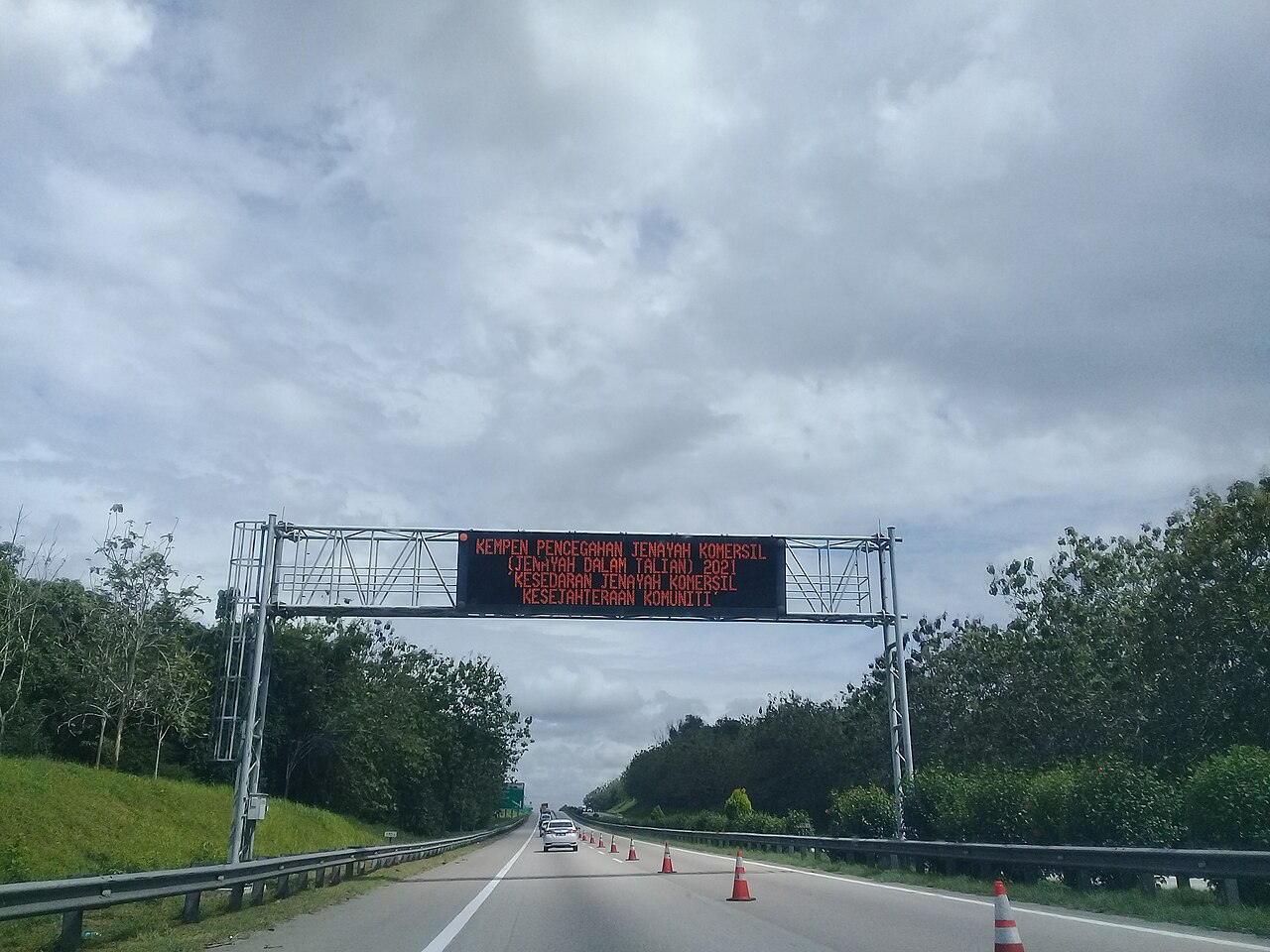
Malaysia is built for drivers. Outside the city centres, public transport gets patchy fast, and in Johor Bahru a car turns a two-bus errand into a ten-minute trip. The roads are good, fuel is cheap, and cars are affordable by global standards. The wrinkles for foreigners are licensing — which got stricter in 2025 — and a fuel-subsidy rule that quietly affects what you pump. First, the basics: Malaysia drives on the left, the steering wheel is on the right, and most highways are toll roads paid by a Touch ‘n Go card or RFID tag.
Settling in JB? This pairs with our guides to the cost of living and renting in Johor Bahru — a car is often the biggest line after rent.
Can I drive on my foreign licence?
Short stays, yes. The rules depend on where you’re from and how long you’re here:
- Short-term visitors (up to 90 days) — you can drive on your home-country licence together with an International Driving Permit (IDP) recognised under the 1949 or 1968 conventions. Get the IDP in your home country before you travel; you generally can’t issue your own country’s IDP from inside Malaysia.
- ASEAN nationals — if your licence is from an ASEAN member state (Singapore, Thailand, Indonesia, etc.), you can drive on your national licence alone, no IDP needed, under the ASEAN agreement.
- Licence not in English or Malay — you’ll need a certified translation (via your embassy in KL or the Malaysian Translation Institute, ITBM) to go with it.
So a tourist or someone here for a few weeks is fine on a foreign licence plus IDP. The complication is for people who stay.
Converting to a Malaysian licence — the 2025 change
This is the part that catches long-term expats off guard. As of 2025, JPJ (the road transport department) suspended conversion of foreign driving licences to Malaysian ones. For years, holders of certain passes — Employment Pass categories, MM2H, spouses of citizens, resident/talent pass holders and others — could swap their foreign licence for a Malaysian one. That route is currently closed.
A few things to keep straight, because the news is easy to misread:
- A change announced for 1 June 2026 allows conversion of foreign licences again — but only for Malaysian citizens returning with an overseas licence. It does not reopen conversion for foreign nationals on work or residence passes.
- For a foreigner on a long-term pass who can no longer rely on an IDP indefinitely, the current path is the full Malaysian licensing process: enrol at a driving school, sit the theory (KPP) test, do the supervised hours, and pass the practical test.
Bottom line as of May 2026: confirm your own situation directly with JPJ before assuming you can convert, because the policy is actively moving.
Buying a car
New or used, the buying mechanics are similar; the financing is where foreigners feel the difference.
New vs used. New cars come with a warranty and a clean ownership history but depreciate fast. The used market is large and active — sites like Carlist and mudah, plus dealers — and gives you far more car for your ringgit. National brands (Perodua, Proton) are cheapest to buy and run; Japanese marques hold value well.
Financing as a foreigner. This is the big one. Banks lend to expats, but on tighter terms than to citizens. Based on lender practice as of 2026, expect:
- Margin of financing around 60–70% of the car’s value, versus up to 90% for locals — so a down payment of 30–40% is common.
- A work permit with meaningful remaining validity (often 2+ years), proof of employment, and a local address.
- A minimum income threshold (lenders commonly cite somewhere in the RM5,000–8,000/month region) and sometimes a local guarantor.
- Slightly higher interest rates and shorter tenure than a citizen would get.
If you can’t get financing on workable terms, paying cash for a solid used national-brand car is the pragmatic move for many expats — and it sidesteps the guarantor problem entirely.
Road tax and insurance
Two things every car on the road must have, renewed annually:
- Road tax — calculated mainly by engine capacity (cc). For ordinary small-to-mid cars it’s modest; it climbs steeply for big engines. You renew it yearly, online or at JPJ/post offices, and you can’t legally drive without it.
- Insurance — legally mandatory. The minimum is third-party cover, but most owners take comprehensive, which covers your own car too. You need valid insurance in place to renew road tax, so the two go together. Premiums depend on the car’s value, your no-claim discount, and add-ons (flood and windscreen cover are worth considering here given the rains).
Foreigners get insured normally — you’ll just provide your passport, visa and local details. Get quotes from a couple of insurers or an aggregator before you renew; prices vary.
The fuel rule foreigners must know
Here’s the one that genuinely catches people out. Malaysia subsidises RON95 petrol for citizens at a fixed low price (RM1.99/litre under the BUDI95 scheme as of 2026), with a monthly quota tied to a MyKad. Two consequences for foreigners:
- Non-citizens without a MyKad pay the unsubsidised RON95 price if driving a Malaysian-registered car — you can still pump RON95, just not at the RM1.99 rate.
- Foreign-registered vehicles are banned from RON95 entirely and must use RON97, with enforcement that took effect from 1 April 2026 — and this applies even if the driver holds a MyKad.
In plain terms: if you drive a Malaysian-plated car you can use RON95 (at full price) or RON97; if you drive in on Singaporean or other foreign plates, you must fill up with RON97. RON97 costs more per litre but is unsubsidised and floats with the market. This matters most for the JB–Singapore crowd driving foreign-plated cars across the Causeway.
Driving culture and tips
A few honest notes from the road here:
- Lane discipline is loose and motorcycles weave between cars constantly — always check before changing lanes, especially on the left.
- Tolls on highways are cashless: get a Touch ‘n Go card and/or the RFID tag and keep it topped up.
- Rain comes hard and fast. Sudden downpours flood low roads; slow right down.
- Parking in city centres is paid and can be tight; many malls have ample covered parking.
- JB specifically: Causeway and Second Link traffic into Singapore can be brutal at peak hours — build it into your plans, and watch the fuel rule above if you’re on foreign plates.
Where to go next
A car is usually one of the larger costs after rent, so factor it into your budget early — see our Johor Bahru cost of living guide. If you’re still figuring out where to live (and whether you’ll even need to drive much), start with renting in Johor Bahru and the relocation guide.
Unsure whether you can convert your licence, or stuck on car financing as a foreigner? Get in touch.
About the author
Chris Tan lives and works in Johor Bahru, Malaysia, helping people relocate to and buy property in the Iskandar region. Questions about your move? Get in touch.
Keep reading
 Living Essentials
 Buying a Car in Malaysia: New, Used & Recon, Prices & Number Plates
Why cars cost so much in Malaysia, the difference between new, used and recon cars, and how the JPJ number-plate bidding (JPJeBid) actually works — a 2026 guide.
24 Feb 2026
 Living Essentials
 Healthcare in Malaysia for Expats & Newcomers
How healthcare works in Malaysia for expats — public vs private hospitals, real GP and specialist costs, insurance, and why Singaporeans cross to JB for care.
1 Mar 2026
 Living Essentials
 Income Tax in Malaysia for Foreigners & Residents
A plain-English guide to Malaysian income tax for foreigners — the 182-day residency rule, resident progressive rates, the flat 30% non-resident rate, MM2H, and filing.
27 Feb 2026
 Living Essentials
 Malaysia SIM Card & Mobile Data: A Newcomer's Guide
Getting a Malaysian SIM in 2026 — the main telcos, prepaid vs postpaid, eSIM, the mandatory passport registration rule, real data plan prices, and where to buy.
5 Mar 2026
 Moving to Malaysia
 Best Areas to Live in Johor Bahru: A Neighbourhood Guide
Where to live in Johor Bahru — JB city, Bukit Indah, Iskandar Puteri, Mount Austin and more, compared by lifestyle, commute to Singapore, and who each suits.
7 Feb 2026
 Property & MM2H
 Buying Property in Iskandar Malaysia: A Foreigner's Guide (2026)
Can foreigners buy property in Johor? Yes — here's how it actually works in Iskandar Malaysia: rules, process, financing, fees, and the mistakes to avoid.
10 Feb 2026