MM2H for Applicants from China: A Practical Guide (2026)
Mainland Chinese applicants face a different MM2H document path — police clearance, notarisation and translation. A practical, first-hand guide to getting it right.
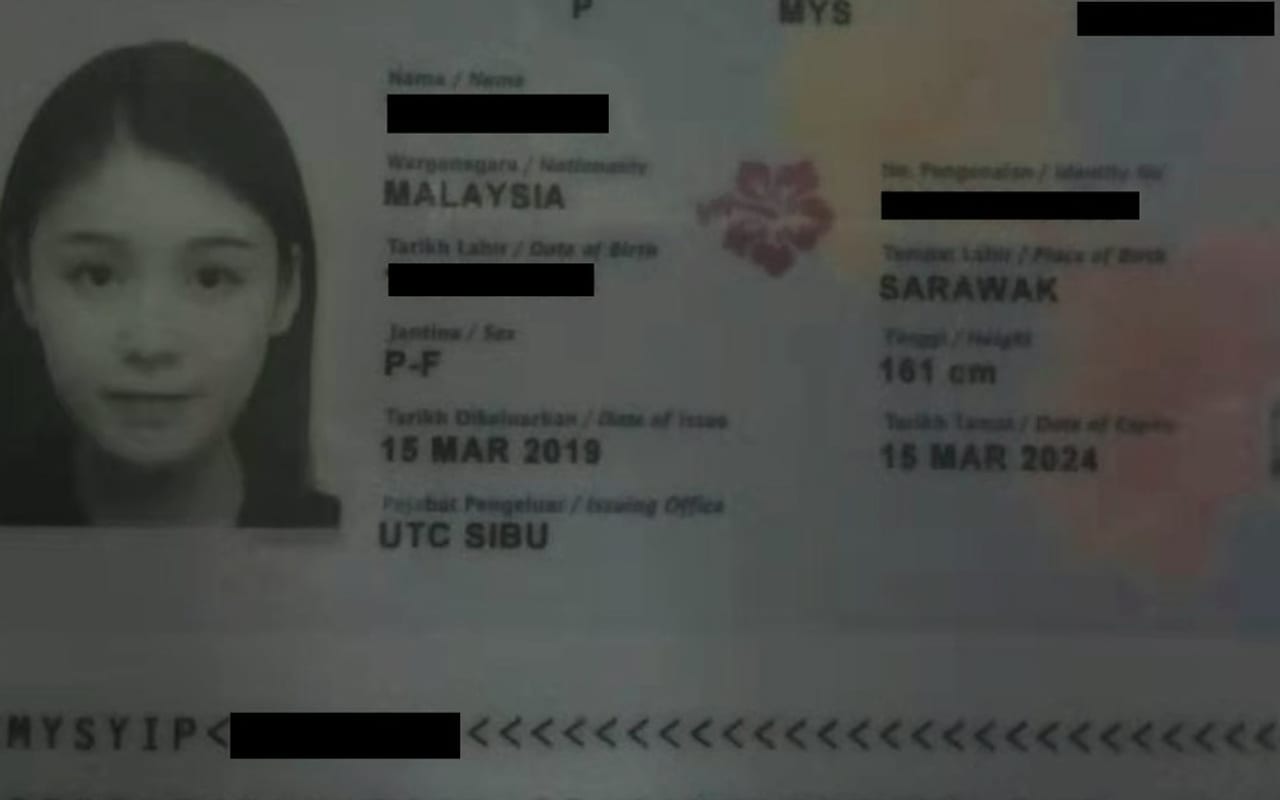
Mainland Chinese applicants make up a large share of MM2H demand, and for good reason — Malaysia is close, the cost of living is reasonable, and the lifestyle suits a lot of families looking for a base outside China. But here’s the thing most general MM2H guides skip: if you hold a Chinese passport, the rules of the programme are the same as for everyone else, but the document path is meaningfully different. That difference is where applications stall.
I’ll be straight about why I’m writing this one. I’ve held a Chinese multiple-entry visa and a China employment pass since 2012, and I spent years working in mainland China before basing myself in Johor Bahru. I’ve personally dealt with provincial and municipal government departments, sat through administrative approvals, obtained a 无犯罪记录证明 (no-criminal-record certificate) at the 公安局 (Public Security Bureau), and had documents notarised (公证) — including asset notarisation. So when I say the Chinese document path has its own quirks, it’s not theory. This guide is about those quirks, not the headline visa rules, which I’ll point you to elsewhere.
Read this first: MM2H requirements change, and so do the procedures on the Chinese side. Treat everything below as the shape of the process, not the final word. Always confirm current MM2H requirements on the official portal (mm2h.gov.my) before committing anything, and verify the latest Chinese-side procedures with the relevant authority.
Why China applicants need a slightly different playbook
The MM2H tiers, the fixed-deposit amounts, the property rules — none of that changes because of your nationality. What changes is the paperwork you have to assemble before you can even submit a clean application.
For most Western applicants, a police clearance and a few certified copies are a relatively smooth errand. For a mainland Chinese applicant, the same requirements route you through Chinese government offices, notary offices (公证处), and a translation-and-authentication chain — all of which take time, follow their own logic, and are almost entirely conducted in Chinese. The visa decision is Malaysian; the document-gathering is largely Chinese. Getting the second part right early is what separates a six-week application from a six-month one.
The document differences — this is the core
1. The police clearance certificate (无犯罪记录证明)
Every MM2H applicant needs to show a clean criminal/security record. For a Chinese national, this is the 无犯罪记录证明 — the no-criminal-record certificate.
In broad terms, this is obtained through the Public Security Bureau (公安局) connected to your registered residence (户籍). The certificate on its own is usually not enough for an overseas application — it typically has to be notarised by a Chinese notary office (公证处) and, because the Malaysian side works in English and Malay, translated as part of that notarisation. A bare certificate handed straight to an MM2H agent is the most common avoidable rejection I see.
2. Notarisation (公证) and authentication
Notarisation is the step that trips up applicants who assume a document is “official enough” the moment a government office issues it. In the Chinese system, a separate notary office (公证处) produces a notarial certificate (公证书) that packages the original document, a certified translation, and the notary’s attestation together. That bundle is what overseas authorities actually want to see.
Depending on the document and the current rules, there may be a further authentication layer on top of notarisation. The exact chain has shifted in recent years, so don’t assume the process a friend used two years ago still holds.
3. Notarised proof of assets and income
MM2H is a financial visa, so you’ll need to evidence assets and/or income. For Chinese applicants this usually means bank statements and asset records that — like the police clearance — often need to be notarised and translated to be accepted, rather than submitted as raw Chinese-language printouts.
The practical headache here is consistency: the names, amounts, and dates across your bank documents, notarial certificates and translations all need to line up cleanly. Mismatches (a romanised name spelt two different ways, a figure that doesn’t reconcile) cause back-and-forth that you could have avoided by preparing the bundle carefully the first time.
4. Translation and the all-Chinese-language gap
This is the quiet friction point. Malaysian authorities and licensed MM2H agents work in English (and Malay). Your source documents — household registration, certificates, statements — are in Chinese. Translation is therefore not optional, and it’s not just any translation: it generally needs to be a certified/notarised translation that the notary office or an approved translator stands behind.
Beyond the documents themselves, there’s the human side: a lot of applicants are navigating a Malaysian programme, a Malaysian agent, and Malaysian forms entirely through a language they don’t read fluently. That’s a real source of mistakes — agreeing to something you didn’t fully understand, or missing a condition buried in an English-language requirement. It’s worth having someone you trust who can bridge both sides.
A note on process friction
None of the China-specific steps are exotic — they’re standard within the Chinese administrative system. The friction comes from sequencing and timing, not difficulty. The Public Security Bureau, the notary office and the translation step each run on their own schedule, and they don’t coordinate with each other or with your MM2H timeline. If you start gathering documents only after you’ve chosen a tier and engaged an agent, you’ll spend weeks waiting on offices that have nothing to do with Malaysia.
The fix is boring but effective: treat the Chinese-side document chain as a parallel track you start early, not a follow-up task. By the time your application is ready to submit, the notarised, translated bundle should already be sitting in a folder.
The standard tiers still apply — the visa rules don’t change
Worth repeating, because it reassures a lot of people: your nationality changes the paperwork, not the programme. The four MM2H tiers — SEZ, Silver, Gold and Platinum — apply to you exactly as they apply to anyone else. Fixed deposits run from around USD 32k (the SEZ tier, age 50+) up to USD 1m (Platinum); offshore-sourced funds are tax-exempt; up to 50% of the fixed deposit can be withdrawn after a year for property, medical or education; and applications go through a licensed agent. I won’t re-list all of it here.
For the full breakdown of who each tier suits and what it costs, read the tiers and costs guide rather than relying on the summary above — those numbers move. For the end-to-end sequence, see the application process guide. And for the big-picture overview of the whole programme, start with the MM2H 2026 pillar guide. You can also browse everything in the MM2H hub.
Figures as of May 2026, from the official MM2H programme (mm2h.gov.my). Always confirm the latest tier amounts and rules on the official portal before committing a single ringgit.
Get the documents right early
If there’s one honest steer in this whole guide, it’s this: for a Chinese applicant, the MM2H bottleneck is almost never the visa decision — it’s the document chain. Police clearance, notarisation, asset proof, certified translation. Each one is straightforward on its own; together, started late and out of order, they’re what turns a clean application into a frustrating one.
So before you fixate on which tier or which property, get the paperwork moving. Confirm the current Chinese-side procedure for the no-criminal-record certificate and notarisation (these have changed in recent years — verify, don’t assume), line up a translation route, and keep your names and figures consistent across every document. Do that, and the Malaysian side tends to be the easy part.
Got a specific question about the document path from China? Get in touch — happy to point you in the right direction. (To be clear: this site is educational and is not a licensed MM2H agent — applications must go through a licensed agent, and you should verify all current requirements on mm2h.gov.my.)
About the author
Chris Tan lives and works in Johor Bahru, Malaysia, helping people relocate to and buy property in the Iskandar region. Questions about your move? Get in touch.
Keep reading
 Property & MM2H
 Forest City SEZ MM2H: The Lowest-Deposit Route (2026)
The Johor SEZ tier is the cheapest way into MM2H — a USD32k–65k deposit, a 10-year visa, and a compulsory Forest City property. Here's the honest breakdown.
24 Feb 2026
 Property & MM2H
 MM2H 2026: The Complete Guide to Malaysia My Second Home
How the MM2H visa actually works in 2026 — the federal vs Johor tier, the process, documents, and what to watch for. An honest, ground-level guide.
8 Feb 2026
 Property & MM2H
 How to Apply for MM2H: Process & Documents (2026)
The MM2H application process step by step in 2026 — eligibility, the documents you'll need, certification and translation, and a realistic timeline.
14 Feb 2026
 Property & MM2H
 MM2H FAQ: Your Questions Answered (2026)
Straight answers to the most common MM2H questions in 2026 — minimum stay, the fixed deposit, working, property, timelines, and whether it leads to PR.
23 Feb 2026
 Moving to Malaysia
 Best Areas to Live in Johor Bahru: A Neighbourhood Guide
Where to live in Johor Bahru — JB city, Bukit Indah, Iskandar Puteri, Mount Austin and more, compared by lifestyle, commute to Singapore, and who each suits.
7 Feb 2026
 Moving to Malaysia
 Cost of Living in Johor Bahru 2026: A Real Monthly Budget
What it actually costs to live in Johor Bahru each month — rent, utilities, food, transport — broken down for singles and couples. Real figures, dated.
4 Feb 2026