Chinatown KL (Petaling Street): What to See & Eat
A local guide to Chinatown Kuala Lumpur and Petaling Street — temples, Central Market, the night bazaar, and the best street food to eat, with honest tips for 2026.
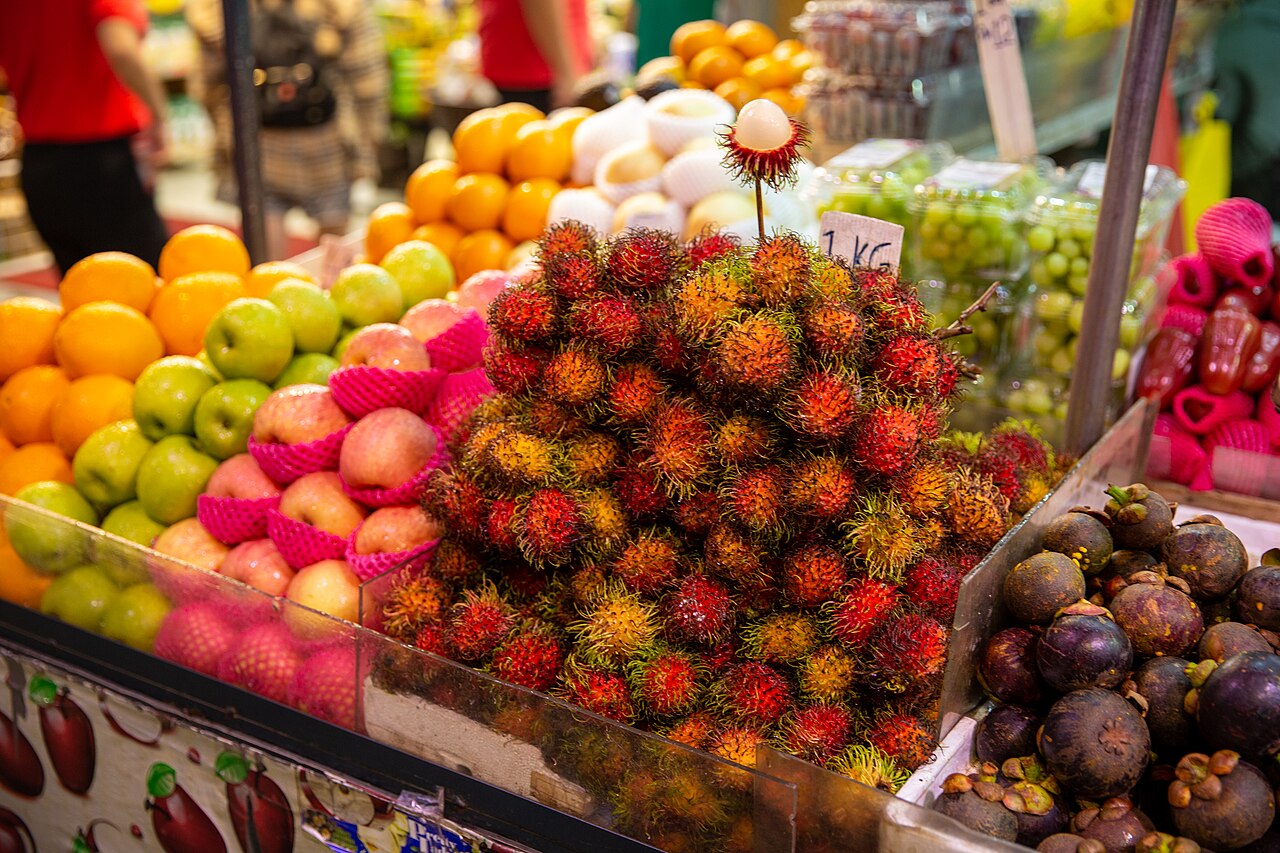
Chinatown is the oldest, most layered corner of Kuala Lumpur. This is where the city grew up — a tangle of pre-war shophouses, century-old temples, hawker stalls that have been frying the same noodles for generations, and a covered market street that turns into a haggling free-for-all every evening. It’s loud, hot, a little chaotic, and completely worth it. Come hungry.
Here’s how to do it properly.
Petaling Street: the night bazaar
The spine of Chinatown is Petaling Street (Jalan Petaling), a covered pedestrian lane under a green roof that becomes a packed night market from around 6pm. Stalls sell clothing, watches, bags, sunglasses, phone accessories, and souvenirs — much of it the “inspired by” variety. Bargaining is expected. Start at roughly half the asking price and meet somewhere in the middle, and walk away if it’s not working; there’s another stall selling the same thing ten steps on.
Honestly, the shopping is secondary. The real draw is the atmosphere and the food woven through it. Entry is free, it’s open to everyone, and weekdays are noticeably calmer than weekends.
Petaling Street (night bazaar)
- 🕐 Hours
- Stalls open daily from around 6pm till late
- 📍 Address
- Jalan Petaling, City Centre, 50000 Kuala Lumpur
The temples
Chinatown is one of the best places in KL to see the city’s mix of faiths sitting side by side.
Sri Mahamariamman Temple
The oldest and grandest Hindu temple in Kuala Lumpur, founded in 1873, with a spectacular five-tiered gopuram (gateway tower) about 23 metres high, covered in painted figures of Hindu deities. It’s right on the edge of Chinatown on Jalan Tun H S Lee. Remove your shoes before entering, dress modestly, and there’s usually a small fee to mind your shoes at the entrance. Open daily, roughly 6am to 8.30pm (later on Fridays).
Sri Mahamariamman Temple
- 🕐 Hours
- Sun–Thu 6am–1pm & 4–8pm, Fri 6am–1.30pm & 4–9.30pm, Sat 6am–1pm & 4–9pm
- 📍 Address
- 163 Jalan Tun H S Lee, City Centre, 50000 Kuala Lumpur
Guan Di Temple
A striking Taoist temple dedicated to Guan Di, the God of War — bold red exterior, jade and gold detailing, rows of statues, and big incense burners at the door. It sits right beside Sri Mahamariamman, so you can see both in minutes. The contrast between the two, a few steps apart, sums up KL’s old quarter.
Guan Di Temple
- 🕐 Hours
- Daily, roughly 7am–7pm
- 📍 Address
- 168 Jalan Tun H S Lee, City Centre, 50000 Kuala Lumpur
Sin Sze Si Ya Temple
The oldest Taoist temple in KL, founded in 1864 by Kapitan Yap Ah Loy, the figure most associated with the city’s early growth. Quieter and less touristed, tucked just off the main streets — worth the short detour for a calmer moment.
Sin Sze Si Ya Temple
- 📍 Address
- 14A Lebuh Pudu, City Centre, 50000 Kuala Lumpur
Central Market and Kasturi Walk
A two-minute walk away, Central Market (Pasar Seni) is a restored 1930s Art Deco building that’s now a cultural and craft hub — batik, handicrafts, souvenirs, art, and small cafes, all under air conditioning. It’s a more comfortable, fixed-price alternative to the haggling outside. Kasturi Walk, the covered lane alongside it, has food stalls and souvenir vendors. Central Market is the easy answer when the heat wins and you need a cool browse.
Central Market (Pasar Seni)
- 🕐 Hours
- Daily 10am–10pm
- 📍 Address
- Jalan Hang Kasturi, City Centre, 50050 Kuala Lumpur
What to eat
This is the real reason to come. Chinatown’s food runs from grimy old-school coffee shops to legendary hawker stalls. A few things to seek out:
- Hokkien mee — thick noodles in dark, smoky soy sauce, a KL signature. Some of the city’s most famous versions are in and around this area.
- Char kuey teow — flat rice noodles fried hard over high heat with prawns, egg, and cockles.
- Wantan mee — springy egg noodles with char siu and dumplings, found in the old kopitiams.
- Hainanese chicken rice — a Chinatown staple done well at several long-running shops.
- Air mata kucing — a chilled herbal longan drink sold from a famous stall near the Petaling Street arch. Order it on a hot evening and you’ll understand the queue.
- Kopi — proper old-school coffee, thick and sweet, from the traditional coffee shops. Pull up a stool and watch the street go by.
Most hawker dishes run roughly RM8 to RM18. Bring cash — many of the older stalls don’t take cards.
Practical tips
- Go late afternoon into evening, when the market comes alive but before the heaviest weekend crowds. Weekdays are calmer.
- Carry cash in small notes for food and bargaining.
- Dress modestly for the temples and slip your shoes off where required.
- Keep bags zipped in the dense crowds — it’s safe, just crowded.
- It’s walkable from Pasar Seni MRT/LRT station, which sits right by Central Market.
- Pace the heat. Alternate the open streets with cool stops at Central Market or an air-conditioned cafe.
How I’d spend an evening
Arrive around 5pm while it’s still light. See Sri Mahamariamman and Guan Di temples first, duck into Central Market for the air-con and a browse, then hit Petaling Street as the stalls light up. Eat your way down the lane — Hokkien mee, a bowl of wantan mee, a cup of air mata kucing to cool off — and let the chaos carry you. That’s Chinatown KL at its best.
For more ideas around the capital, see the Kuala Lumpur explore page, and if you’re budgeting a trip, the Malaysia travel budget guide shows how far your ringgit goes on food like this.
About the author
Chris Tan lives and works in Johor Bahru, Malaysia, helping people relocate to and buy property in the Iskandar region. Questions about your move? Get in touch.
Keep reading
 Travel & Explore
 Best Time to Visit Malaysia: Weather, Seasons & Crowds
When to visit Malaysia depends on where you go. A region-by-region guide to monsoons, haze, heat, school holidays and 2026 festival dates from someone who lives here.
2 Mar 2026
 Travel & Explore
 Crossing the JB–Singapore Border: A Complete Guide
How to cross the Johor Bahru–Singapore border in 2026 — Causeway vs Second Link, VEP and road charges, QR/autogate clearance, peak times, and car vs bus vs motorcycle.
8 Mar 2026
 Travel & Explore
 Bak Kut Teh in Johor Bahru: Where to Go
A local guide to bak kut teh in Johor Bahru — Shoon Huat, Hwa Mei, Kota Tinggi style, the difference between herbal and peppery broth, and rough 2026 prices.
6 Mar 2026
 Travel & Explore
 Beaches Near Johor Bahru
A local's guide to beaches near Johor Bahru — Desaru Coast, Tanjung Balau, Tanjung Piai and more, with drive times, rough 2026 costs and honest expectations.
11 Mar 2026
 Moving to Malaysia
 Best Areas to Live in Johor Bahru: A Neighbourhood Guide
Where to live in Johor Bahru — JB city, Bukit Indah, Iskandar Puteri, Mount Austin and more, compared by lifestyle, commute to Singapore, and who each suits.
7 Feb 2026
 Property & MM2H
 Buying Property in Iskandar Malaysia: A Foreigner's Guide (2026)
Can foreigners buy property in Johor? Yes — here's how it actually works in Iskandar Malaysia: rules, process, financing, fees, and the mistakes to avoid.
10 Feb 2026